If you have started preparing for CCNA Certification in India, you have probably heard that subnetting is one of the most challenging topics in networking. While the calculations may seem intimidating at first, subnetting is actually a logical way of organizing networks to improve performance, security, and efficient use of IP addresses.
Whether you are planning to become a network engineer or simply preparing for the CCNA exam, understanding subnetting is a skill that will benefit you throughout your IT career. At Learner Space Pro, we help learners simplify complex networking concepts by combining theory with practical lab exercises, making topics like subnetting easier to understand and apply.
What Is Subnetting?
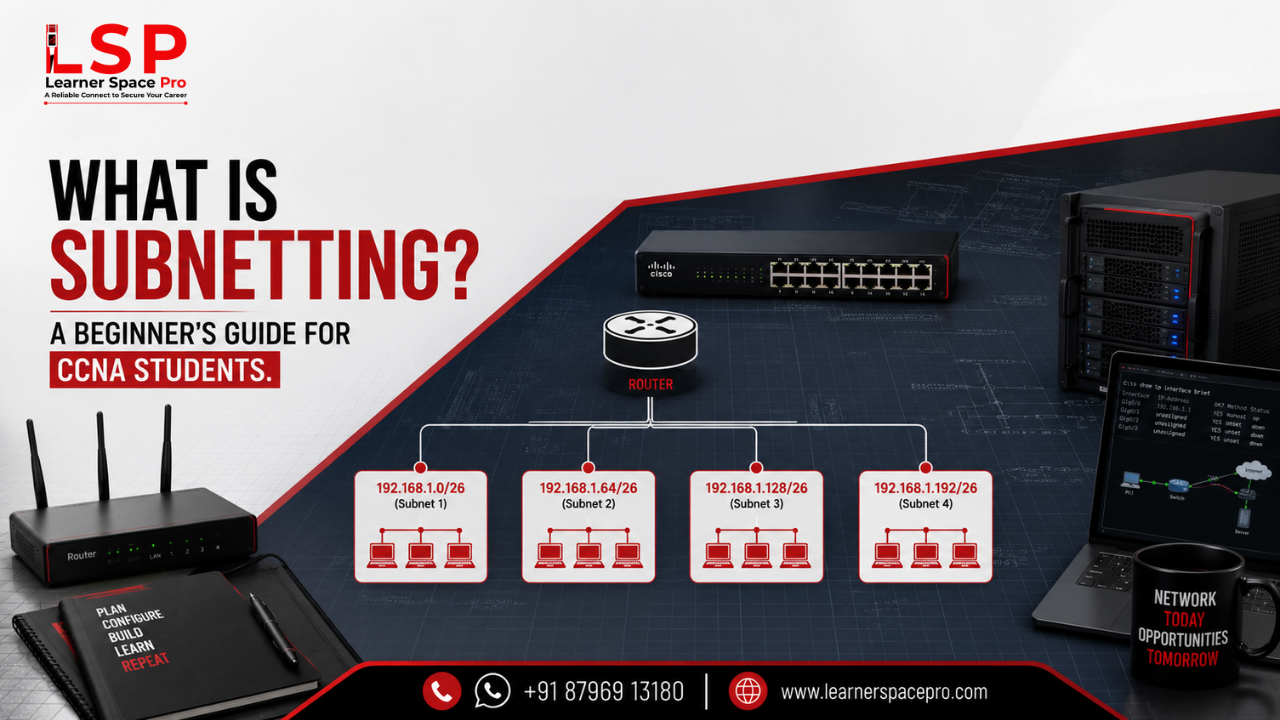
Subnetting is the process of dividing a large IP network into smaller, manageable networks called subnets.
Instead of placing every device on one large network, organizations create multiple smaller networks to improve communication, reduce unnecessary traffic, and strengthen security.
For example, a company may create separate subnets for:
- Human Resources
- Finance
- Sales
- IT Department
- Guest Wi-Fi
Although these departments are connected to the same organization, subnetting allows each network to operate more efficiently while maintaining better control over communication.
Why Is Subnetting Important?
As organizations grow, the number of connected devices also increases. Without subnetting, network performance can decline due to excessive broadcast traffic and inefficient IP address usage.
Subnetting helps organizations:
- Improve network performance.
- Reduce unnecessary broadcast traffic.
- Organize devices more efficiently.
- Enhance network security.
- Simplify troubleshooting.
- Optimize IP address allocation.
These benefits make subnetting a fundamental skill for every network engineer.
Understanding IP Addresses
Before learning subnetting, it is important to understand IP addressing.
Every device connected to a network requires a unique IP address to communicate with other devices.
Subnetting works by dividing an IP address into two sections:
- Network portion
- Host portion
The subnet mask determines how these portions are separated, allowing network engineers to create multiple smaller networks from a single address range.
Where Is Subnetting Used?
Subnetting is used in almost every enterprise network.
Common examples include:
- Corporate office networks
- Schools and universities
- Hospitals
- Banks
- Data centers
- Government organizations
- Cloud environments
Whether it is a small business or a multinational enterprise, subnetting helps administrators manage networks more effectively.
Why CCNA Students Must Master Subnetting
The Cisco CCNA Certification places significant emphasis on IP addressing and subnetting because these concepts are used throughout routing, switching, network design, and troubleshooting.
More importantly, subnetting is a practical skill. Network engineers use it daily when designing infrastructures, configuring routers, allocating IP addresses, and solving connectivity problems.
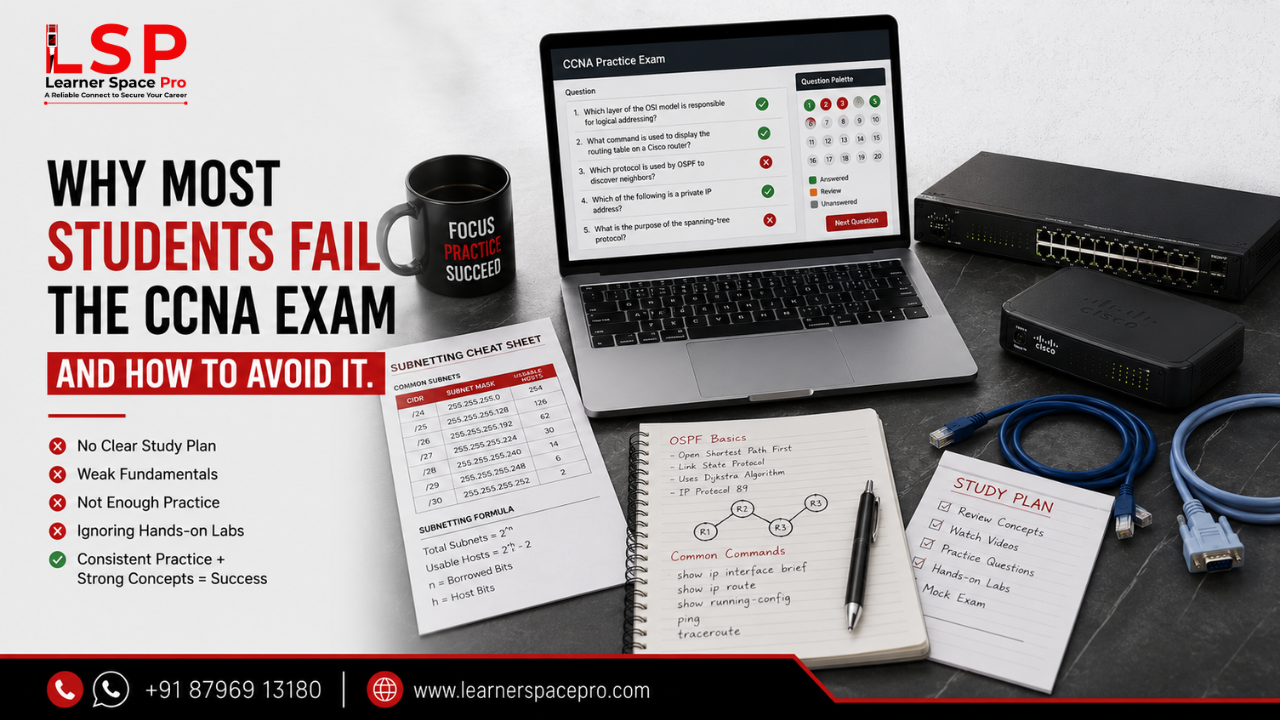
Rather than memorizing formulas, learners should focus on understanding why subnetting is used and practice solving different network scenarios.
Tips to Learn Subnetting Faster
Many beginners find subnetting difficult because they try to memorize calculations instead of understanding the logic behind them.
A better approach is to:
- Learn binary basics.
- Understand subnet masks step by step.
- Practice with simple IP addressing examples.
- Solve subnetting exercises regularly.
- Use networking simulators to apply concepts in practical scenarios.
With consistent practice, subnetting becomes much easier and eventually becomes second nature.
Learn Networking with Practical Experience
Networking concepts become easier when you apply them in real lab environments. Working with routers, switches, and network simulators helps learners understand how subnetting works in actual enterprise networks.
For learners looking to strengthen their networking skills, joining a practical CCNA Training in Bengaluru program provides hands-on experience, instructor guidance, and structured learning that prepares you for both the certification exam and real-world networking challenges.
Build a Strong Networking Foundation with Learner Space Pro
Every successful network engineer starts by mastering the fundamentals, and subnetting is one of the most important concepts you will learn during your CCNA journey. Understanding how IP addresses are organized and how networks are segmented will make advanced topics such as routing, switching, and network security much easier to understand.
At Learner Space Pro, our instructor-led training combines practical labs, expert mentorship, and real-world networking scenarios to help learners prepare for CCNA Certification in India. By developing strong networking fundamentals today, you will be ready for tomorrow’s opportunities in enterprise networking, cloud computing, and cybersecurity.