
Every week, at least a few students come to me with the same problem. They want to get into IT. They have watched hours of YouTube videos, scrolled through LinkedIn, maybe even started a free course or two. But they still feel stuck, not because they lack motivation, but because nobody has given them a clear, honest answer about where to actually begin. If you are struggling to cut through the noise, finding the best IT courses for beginners is the first real step toward building a solid foundation.
So let me try to be that person.
The Real Problem Is Not Lack of Options
If anything, beginners in 2026 have too many options. Networking, cybersecurity, cloud computing, Python, Linux, DevOps, AI, every field looks important, every certification looks necessary, and every course promises to land you a job in three months.
Here is what I have learned after training hundreds of students: the ones who succeed are not the ones who find the “perfect” course. They are the ones who stop overthinking, pick a direction, and stay with it long enough to actually get good.
That is the real secret. Not which course, how seriously you take it.
With that said, let me walk you through the courses I genuinely recommend for beginners in 2026, based on what I have seen work in the real world.
CCNA – Where I would Tell Most Beginners to Start
If a student comes to me with no IT background and asks what to learn first, CCNA is almost always my first recommendation.
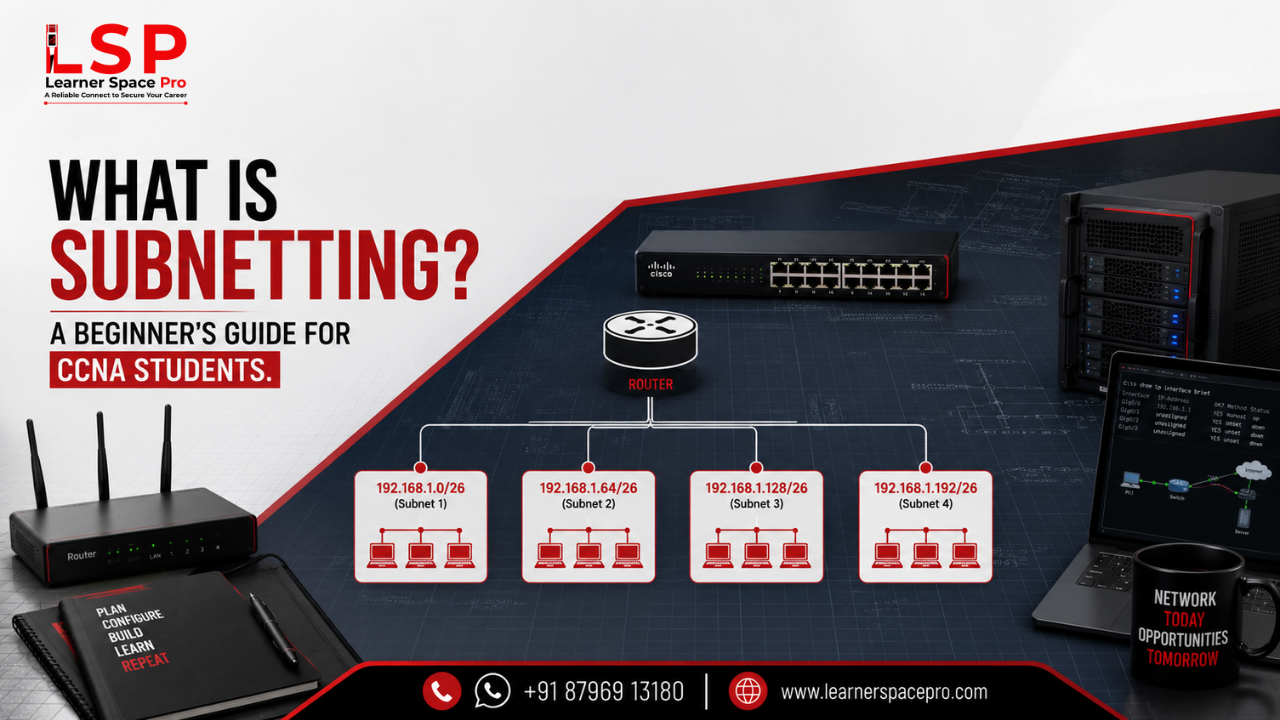
Not because it is the most popular certification. But because CCNA training teaches you something most other courses skip, how networks actually work. How data moves from one device to another. How a router decides where to send traffic. How IP addressing is structured. How VLANs keep traffic separated. How a wireless network handles dozens of devices at once.
Once that foundation is in place, everything else in IT starts making more sense. Cloud networking, cybersecurity, automation all of it is built on top of networking fundamentals. Students who understand networking first tend to pick up advanced technologies faster than those who jump straight into specialized fields.
I have seen students with zero technical background walk into CCNA training nervous and uncertain and walk out four months later genuinely confident, configuring networks, troubleshooting live scenarios, and landing their first networking jobs.
Who it is for: Fresh graduates, IT support engineers, anyone targeting infrastructure, enterprise networking, or NOC roles.
Cybersecurity – A Strong Path, But Build Networking First
Cybersecurity is genuinely one of the fastest-growing fields in IT right now. Organizations are dealing with more threats than ever, and the demand for security professionals is not slowing down.
CEH (Certified Ethical Hacker) is one of the most recognized beginner cybersecurity certifications, covering ethical hacking, penetration testing, vulnerability assessment, and security tools.
But here is something I always tell students who are eager to jump straight into cybersecurity: most security concepts are deeply connected to networking. Firewalls, VPNs, intrusion detection systems, traffic analysis — you cannot really understand these without first understanding how networks communicate.
That is why I often suggest students build their networking foundation first and then move into cybersecurity. It is not a longer route, it is actually a faster one, because things click much more quickly.
Who it is for: Students interested in ethical hacking, threat detection, security operations, and SOC roles.
Cloud Computing – The Skill Employers Can’t Stop Asking For
AWS, Microsoft Azure, Google Cloud, these platforms now run a significant portion of the world’s digital infrastructure. And companies across every industry are looking for professionals who understand them.
Cloud computing courses teach you virtual infrastructure, cloud networking, storage, deployment models, and cloud security. It is practical, it is modern, and it maps directly to how enterprise IT actually operates in 2026.
If you are someone who does not want to be tied to physical hardware and prefers working with scalable, software-driven environments, cloud is a genuinely exciting path.
Who it is for: Students targeting cloud engineer, solutions architect, or DevOps roles.
Python -Quietly Becoming Essential Across All of IT
Python is not just for developers anymore. Networking engineers use it to automate repetitive tasks. Security professionals use it for scripting and analysis. Cloud engineers use it for infrastructure management.
What I like about recommending Python to beginners is that it does not feel as intimidating as other programming languages. The syntax is clean, the logic is readable, and most students become comfortable with the basics faster than they expect.
Even if you are pursuing networking or cybersecurity, picking up basic Python along the way is increasingly becoming a competitive advantage.
Who it is for: Students interested in automation, scripting, DevOps, AI, or adding programming to any existing IT skillset.
Linux – Underestimated, But Quietly Everywhere
Servers run on it. Cloud platforms are built on it. Cybersecurity tools depend on it. Yet most beginners ignore Linux until they are already in the industry and realise they should have learned it earlier.
Basic Linux skills, command-line navigation, file systems, shell scripting, system administration add real value across networking, cloud, cybersecurity, and DevOps roles. It is not a standalone career path for most beginners, but it is a skill that quietly makes you more capable in almost every IT role.
Who it is for: Anyone targeting server administration, cloud, DevOps, or cybersecurity, Linux knowledge compounds with everything else.
So, Which One Should You Choose?
Here is the honest answer: the one that genuinely interests you.
| Your Interest | Where to Start |
| Networking and infrastructure | CCNA |
| Cybersecurity and ethical hacking | Networking basics → CEH |
| Cloud and modern infrastructure | AWS or Azure |
| Automation and programming | Python |
| Server and system administration | Linux |
The biggest mistake I see beginners make is not choosing the wrong course, it is spending so long comparing options that they never actually start. The second biggest mistake is switching fields every few weeks because something else looks more interesting. Neither approach works.
Pick a direction. Commit to it. Practice regularly. That is genuinely all there is to it.
Final Thought
The best IT courses for beginners in 2026 are the ones you actually finish and finish properly, with real lab practice and genuine understanding, not just a certificate you rushed through.
The IT industry is big enough for everyone who is willing to put in the work. Whatever path you choose, take it seriously, stay consistent, and do not chase shortcuts that do not exist.
That foundation will carry you further than any trending certification ever will.