
I get this question almost every week from fresh graduates who cannot decide between networking and cybersecurity, from IT support engineers wondering if there is a better path forward, and from complete beginners who have heard the name CCNA but have no idea where it fits. If you are trying to decide whether to learn CCNA in 2026, let me give you a straight answer: yes, it is absolutely worth it. And I will tell you exactly why.
Networking Is Not Going Anywhere — It is Going Everywhere
The most common misconception I hear is that cloud computing has made traditional networking irrelevant. I understand why people think that, but it is simply not true.
Cloud environments still run on IP addressing, routing, and switching. Cybersecurity professionals need networking knowledge to understand how attacks move through systems, how firewalls operate, and how traffic is monitored. Even modern network automation — which is very much the future of this field — requires you to understand what you are automating before you can write a single script.
The tools have evolved. The fundamentals have not. That is the reality of networking in 2026, and it is the biggest reason why choosing to learn CCNA in 2026 still makes complete sense.
What CCNA Actually Does for Your Career
When students ask me whether CCNA certification is worth it, I always flip the question: what is your alternative?
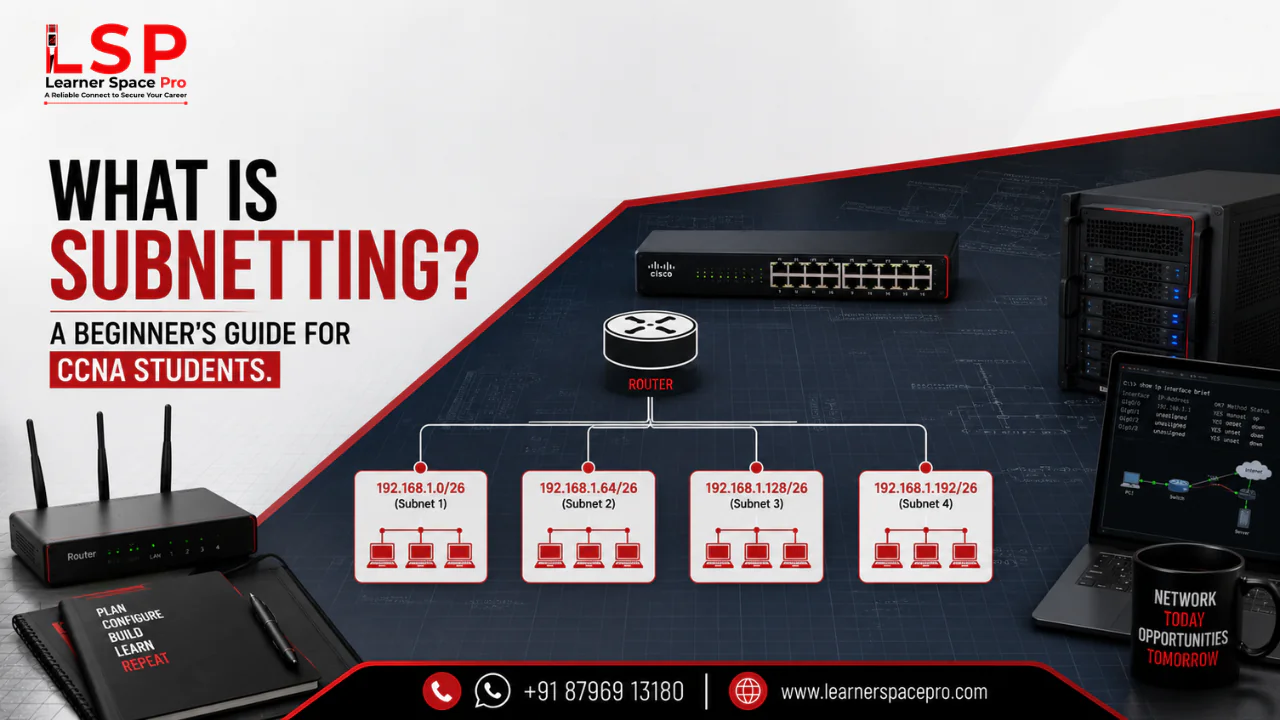
Walking into a networking interview with only theoretical knowledge and no hands-on experience is genuinely difficult. CCNA changes that. It gives you a structured, practical foundation — subnetting, VLANs, routing protocols, network security basics, wireless networking, and introductory automation — and it forces you to actually configure these things, not just read about them.
Employers notice the difference. Candidates who have done real lab work can talk through a troubleshooting scenario confidently. Those who have only watched videos usually cannot.
After completing a CCNA course, the most common entry-level roles include Network Support Engineer, NOC Engineer, Junior Network Engineer, and IT Infrastructure Support. In India, freshers typically start in the ₹3–6 LPA range, moving into ₹6–10 LPA with experience and additional certifications.
Is CCNA Good for Beginners?
One of the things I appreciate most about CCNA is that it genuinely does not assume prior experience. I have trained students who had never configured a router in their life — some who did not even fully understand how their home Wi-Fi worked — and they passed the exam and landed jobs afterward.
What determined their success was not technical background. It was consistency.
The students who practiced labs regularly, revisited concepts they did not understand, and actually spent time configuring networks — those students almost always came out confident and job-ready. The ones who treated it as a theory course usually struggled.
So if you are wondering whether CCNA is good for beginners, yes, it is. But only if you treat the labs as seriously as the concepts.
CCNA Opens Doors Beyond Networking
This is something a lot of people do not realize when they first start. CCNA is not a one-lane road into traditional networking jobs. The foundation it builds is genuinely useful across multiple IT domains.
I have seen students start with CCNA and move into cybersecurity, cloud engineering, DevOps, and data center roles. The networking knowledge did not hold them back — it actually helped them adapt faster than peers who came from non-networking backgrounds.
CCNA certification benefits extend well beyond the job roles on the certificate itself. It is a foundation that supports growth into CCNP, cloud certifications, security certifications, and automation technologies. Whatever direction you eventually want to go in IT, understanding how networks work makes the journey considerably easier.
The Mistakes to Avoid When Preparing
Two mistakes come up again and again in every batch I have trained.
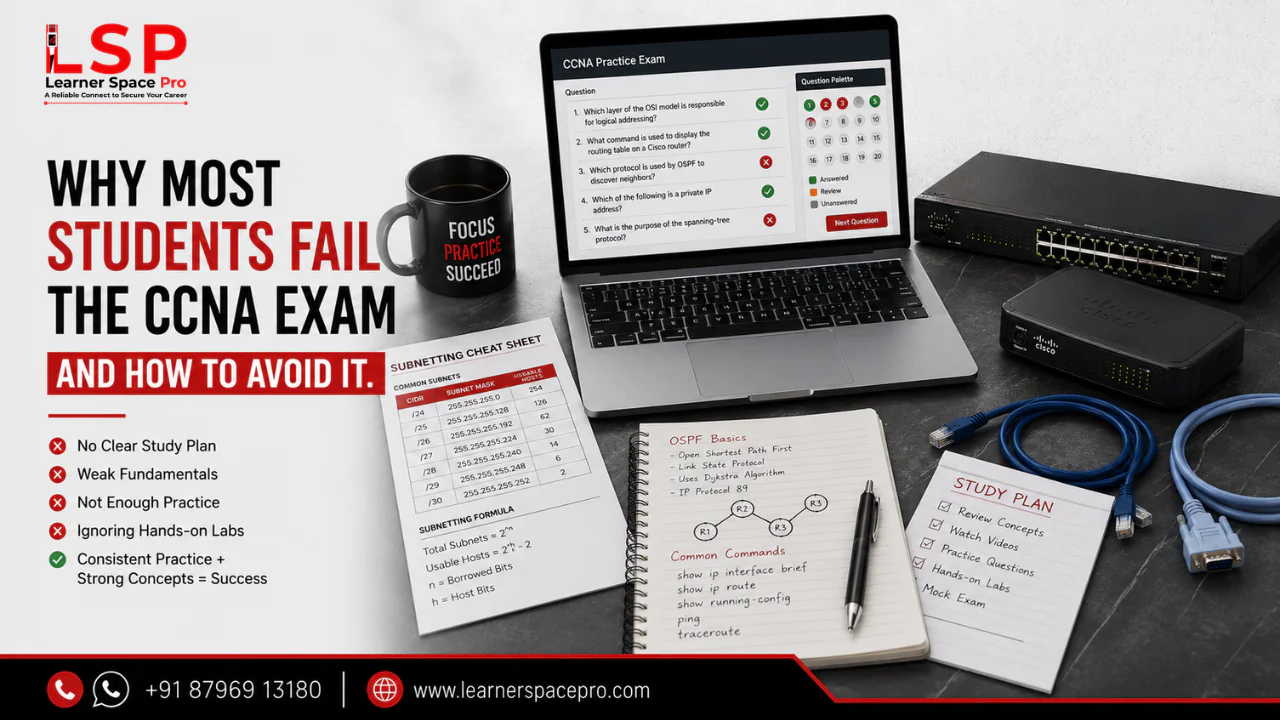
The first is trying to memorize commands without understanding the logic. Networking makes so much more sense when you understand why a router makes a certain decision or why traffic takes a particular path. Memorization fades. Understanding sticks.
The second mistake is skipping labs. Cisco Packet Tracer is free, runs on any laptop, and lets you build full virtual networks at home. There is genuinely no reason to avoid it. Subnetting gets faster through repetition. Routing becomes intuitive when you have actually configured it and watched it work.
Final Thought
If you are still on the fence about whether to learn CCNA in 2026, here is the simplest way to think about it: networking fundamentals are embedded in cloud, cybersecurity, automation, and enterprise infrastructure. That is not changing anytime soon.
If you are serious about building a strong technical foundation and entering the IT industry with practical, job-ready skills, CCNA is still the best place to start.