
I get this question a lot from students who are just finishing their graduation, from IT support guys who feel stuck in helpdesk roles, and from people who have nothing to do with IT but want to switch careers entirely. “What exactly is CCNA, and is the CCNA Certification in 2026 still worth doing?”
My answer is always the same: if you want to build a real networking career, CCNA is still the best place to start. Let me explain why.
What is CCNA Certification?
CCNA stands for Cisco Certified Network Associate. Cisco the company whose routers and switches run inside almost every large enterprise, bank, hospital, and data center you can think of offers this certification specifically for people who are new to networking.
The exam code is 200-301, and it is a single test that covers a surprisingly wide range of topics: IP addressing, subnetting, routing, switching, wireless networking, basic security, and even some introductory network automation. Back in 2020, Cisco merged all their separate CCNA tracks into one unified exam, which honestly made things much simpler for beginners. One certification, one clear path.
What makes CCNA different from other networking courses is that it does not let you get away with just reading theory. You are expected to configure routers, build VLANs, troubleshoot broken connections, and actually understand what is happening inside a network not just describe it in a paragraph. That is exactly why employers respect it.
What Does a CCNA Course Actually Cover?
A lot of students ask me this before they enroll, so let me walk through the main areas:
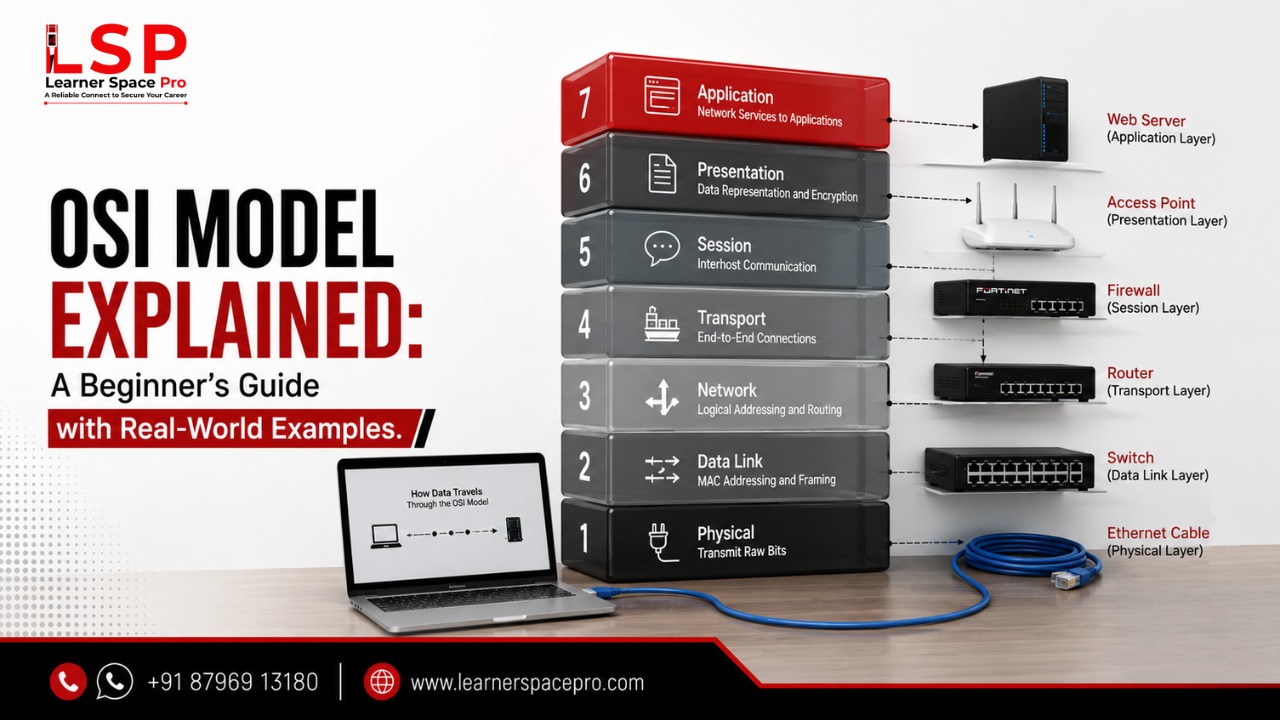
Network Fundamentals are where you start understanding how data moves across a network, how the OSI model works, and how devices like routers and switches make decisions about where to send traffic.
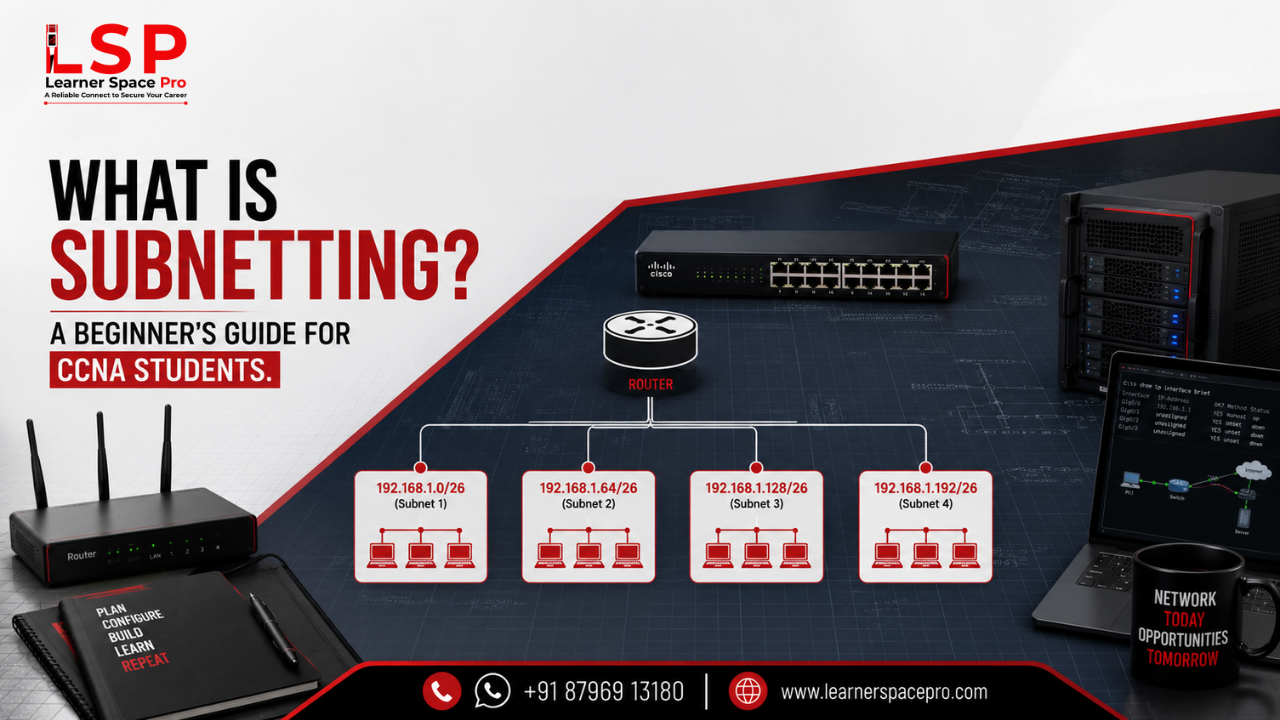
IP Addressing and Subnetting is the section most beginners struggle with initially. It involves math, and the concepts feel abstract at first. But once it clicks and it does click, usually faster than people expect it becomes one of the most useful skills you carry into any networking job.
Routing and Switching covers how routers choose the best path for traffic, how VLANs are used to segment networks logically, and how Spanning Tree Protocol keeps switched networks from running into loops.
Wireless Networking gets into Wi-Fi standards, wireless LAN controllers, and how enterprise wireless environments are set up and managed.
Network Security Fundamentals covers access control lists, securing network devices, and understanding basic threats foundational knowledge for anyone who eventually wants to move into cybersecurity.
Automation and Programmability is the newest addition. Networks today are increasingly managed through software and APIs, and CCNA introduces you to that world at a comfortable level.
A good CCNA training program covers all of this with real lab time not just slides and diagrams.
Who Should Do CCNA Training?
Honestly, a wider range of people than most realize.
I have trained students who came in with zero technical background and walked out with a strong enough foundation to land their first networking job. The common thread among those who succeeded was not prior knowledge it was consistency. They showed up, they practiced, they asked questions, and they put in the lab hours.
CCNA training makes the most sense for fresh graduates who want to enter the IT industry with something concrete on their CV, IT support engineers who are ready to move beyond helpdesk into infrastructure roles, system administrators who work adjacent to networking and want to close knowledge gaps, and career switchers who’ve decided IT is the direction they want to go.
If you are planning to eventually move into CCNP, cloud networking, or cybersecurity, CCNA is the foundation all of those paths are built on.
Is CCNA Certification Still Relevant in 2026?
Some people assume that because cloud and automation have taken over, traditional networking certifications have become less important. That is a misunderstanding of how technology actually works.
Cloud networking, cybersecurity, SD-WAN, and network automation are all built on top of the same core concepts CCNA teaches. You cannot meaningfully work in any of those areas without understanding IP routing, subnetting, VLANs, and how traffic actually moves through a network. The tools have evolved; the fundamentals have not.
CCNA certification in 2026 is still one of the most recognized credentials you can carry into a networking interview. Cisco equipment dominates enterprise environments, and companies actively look for candidates who can demonstrate they understand it. That has not changed.
Career Opportunities and Salary After CCNA
After completing a CCNA course, the most common entry points are Network Support Engineer, NOC Engineer, Junior Network Engineer, and IT infrastructure or system administration roles where networking knowledge is a core requirement.
In India, fresher-level CCNA-certified professionals typically start somewhere in the ₹3–6 LPA range. With a couple of years of hands-on experience and additional certifications, that moves into ₹6–10 LPA. Senior engineers who continue building their skills go well beyond that.
One thing I tell every student: the certification gets you the interview. What gets you the job is whether you can actually troubleshoot a network under pressure. Candidates who have spent real time in labs almost always perform better than those who only prepared through videos and notes.
How Long Does CCNA Preparation Take?
Most students I have worked with are exam-ready within 2 to 4 months, assuming they study consistently and do not skip lab practice. The exact timeline depends on how many hours a day you are putting in and how seriously you treat the hands-on side of preparation.
The biggest mistake beginners make is spending 90% of their time watching content and 10% actually configuring things. It should be closer to the opposite. Subnetting only becomes fast through repetition. Routing only becomes intuitive when you have configured it yourself and watched it work. Cisco Packet Tracer is free, runs on any laptop, and lets you build full virtual networks at home, there is really no excuse to skip the labs.
Final Thought
CCNA is not just a certification, it is the foundation of a networking career. It is beginner-friendly enough that anyone willing to put in the work can earn it, and it is recognized widely enough that it genuinely opens doors across networking, cloud, security, and infrastructure roles.
If you are serious about getting into networking in 2026, choosing the right CCNA training program is the decision that shapes everything that comes after it.